1 in 10 people with cholera will experience severe symptoms 2
Cholera spreads through contaminated drinking water. 1
Adding solutions like chlorine or cooling the water can lower your risk of getting cholera 1.
See the "Water Treatment" section for a full list of preventions and treatments.
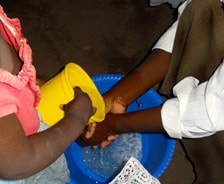
If you are caring for someone with cholera, you must wash your hands thoroughly after touching anything that might be in contact with the patients' feces 1.
Transmission
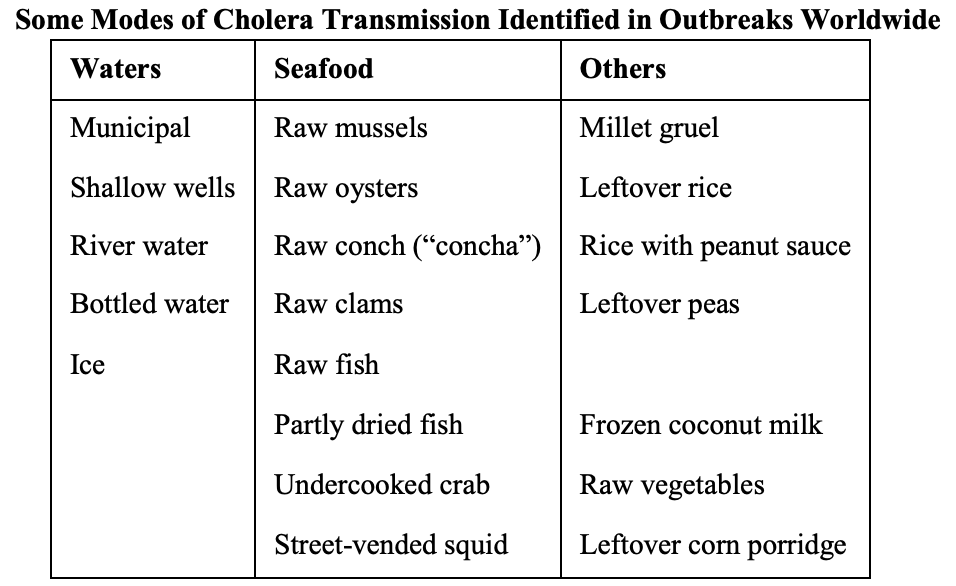
V. cholerae is transmitted through contaminated food or water. The source of contamination is usually through the feces of cholera patients. 1
There is little evidence of direct person-to-person transmission. 1
Clinical Features
The signs and symptoms of cholera are caused by the cholera toxin produced by V. cholerae.
Clinical features
75% of cholera patients are asymptomatic
Of the patients that do show symptoms, they usually have a mild illness
Around ~2% of the infected will have severe cholera (or cholera gravis)
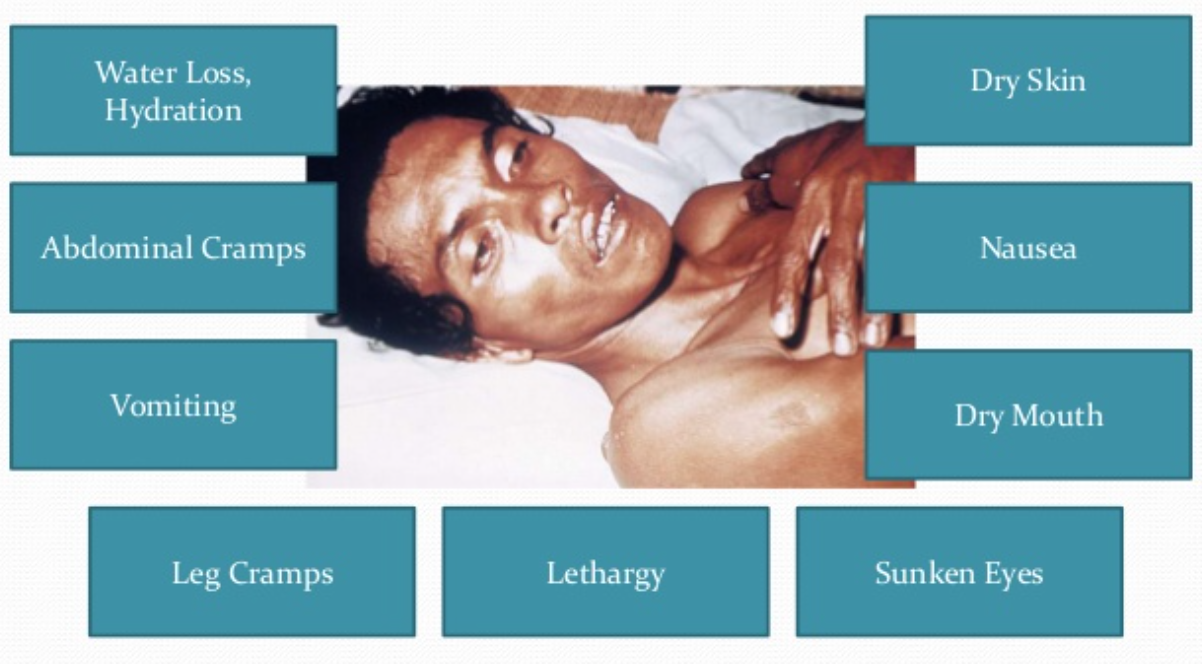
Symptoms of severe cholera:
Severe dehydration
Sunken eyes
Dry mouth and lips
Poor skin turgor
Decreased blood pressure
Poor or absent pulses
Therapies
Rehydration Therapy
Before the invention of rehydration therapy, 30-50% of patients with typical severe cholera died.
Now, the mortality rate is less than 1%.
80-90% of patients can be treated with an oral rehydration solution
Antimicrobial Therapy
Antimicrobials can:
Reduce fluid loss
Shorten the duration of diarrhea
Reduce the length of carriage of cholera in the feces
Antibiotics are recommended for:
Moderate to severe dehydrated patients
Patients who pass large volumes of stool while being on the rehydration treatment
All hospitalized patients
Asymptomatic patients should not receive antibiotics, to reduce the risk of antibiotic resistance
Cholera Complications
Hypoglycemia (low blood sugar): is common and lethal in children with cholera
Acute pulmonary edema: risk among elderly, young children, and anemic patients
Renal failure (anuria): rare and occurs when shock is not rapidly corrected. Hospitalized patients should be checked for urine output before discharge.
Hypokalemia: suspected in cases of repeated painful cramps
The WHO organization recommends rural areas use the following definition for cholera cases: 2
Suspected Cholera Case
If a cholera outbreak has not been declared, any patient 2 years or older with watery diarrhea and severe dehydration, or is dying from watery diarrhea, is a suspected cholera case.
In areas with a declared cholera outbreak, any person presenting with or dying from watery diarrhea is a suspected cholera case.
Confirmed Cholera Case
Vibrio cholerase O1 confirmed by stool culture or PCR, or if the strain is confirmed to be toxigenic
An image of sunken eyes and some description would go here.
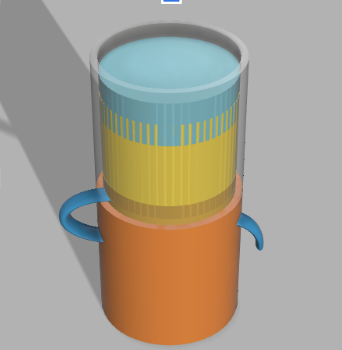
Slow Sand Filter
Slow sand filters can be used to decontaminate groundwater. You should use them
if your governorate is near aquifers. They work by sifting the water through sand a natural biofilm.
Quick facts:
You can produce ~30L of fresh water a day
Uses sand, a readily available resource
After 4-6 months, the biofilm may thicken and lower the output of clean water. To maintain an effective flow rate, the top 5 centimeters must be replaced with clean or washed sand.
Solar Distillation
Solar distillation can be used for governorates near the sea.
Quick facts:
While black-bottomed vessels from high density polyethylene (HDPE) are common, copper vessels are more effective for antimicrobial treatment.
Copper is widely available in Yemen
Copper quickly absorbs the sun's energy (a specific heat of 0.385J/gºC, compared to HDPE with 1.9J/gºC
You can produde more than 6L of clean water in a day
References
Haiti Cholera Training Manual: A Full Course for Healthcare Providers. (2011). Retrieved from https://www.cdc.gov/cholera/pdf/haiticholera_trainingmanual_en.pdf
Illness and Symptoms. (2020, October 02). Retrieved December 13, 2020, from https://www.cdc.gov/cholera/illness.html
Cholera: Lessons from Haiti and Beyond. Current Infectious Disease Reports. (2011). DOI: 10.1007/s11908-011-0221-9
CHAPTER 13: Infectious Disease (CHOLERA) (2014). Retrieved from https://www.slideshare.net/zakkuefuronfrogie/infectious-diseases-34076767